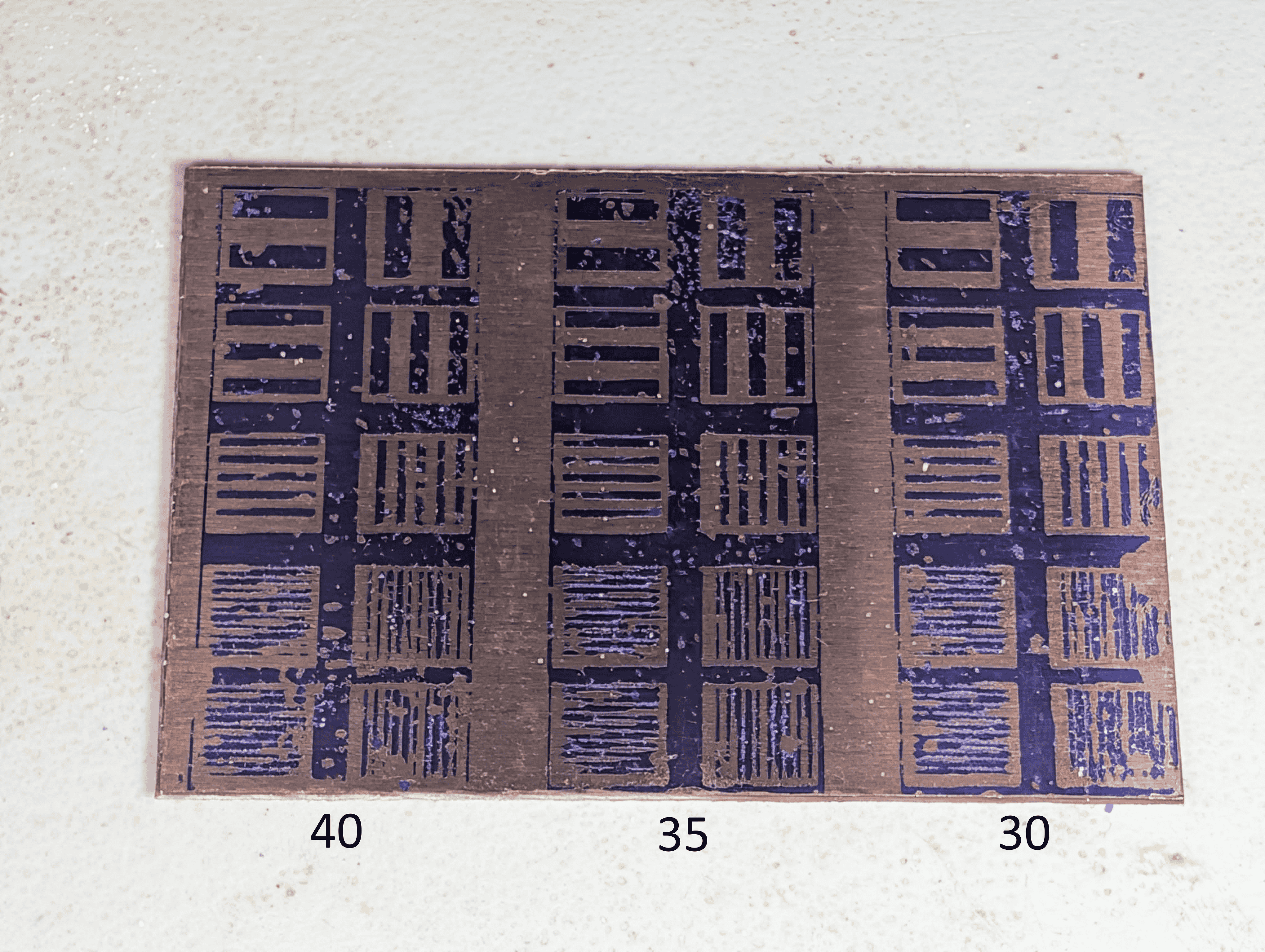
11/8/2026 - Exposure & Development Trial
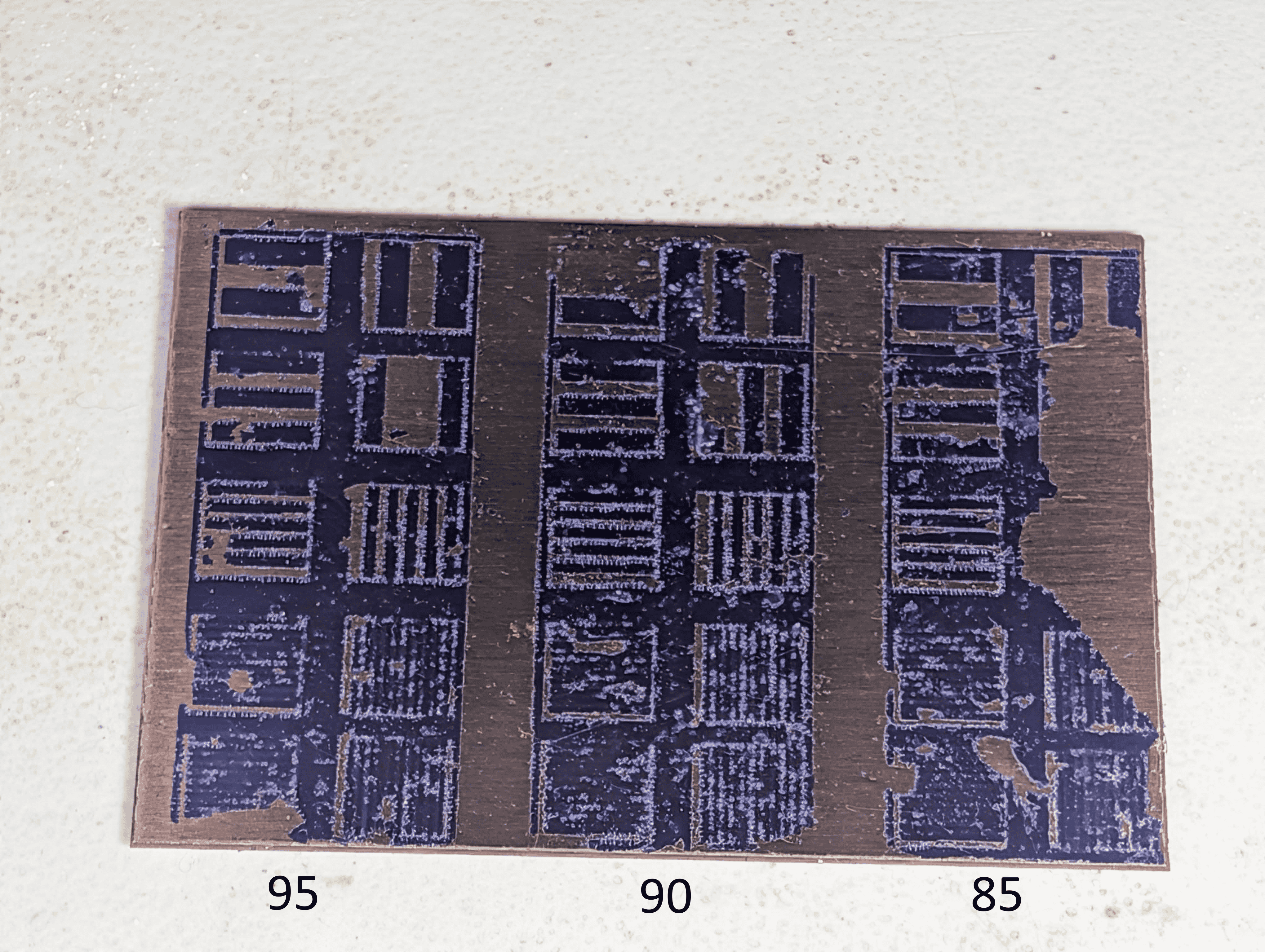
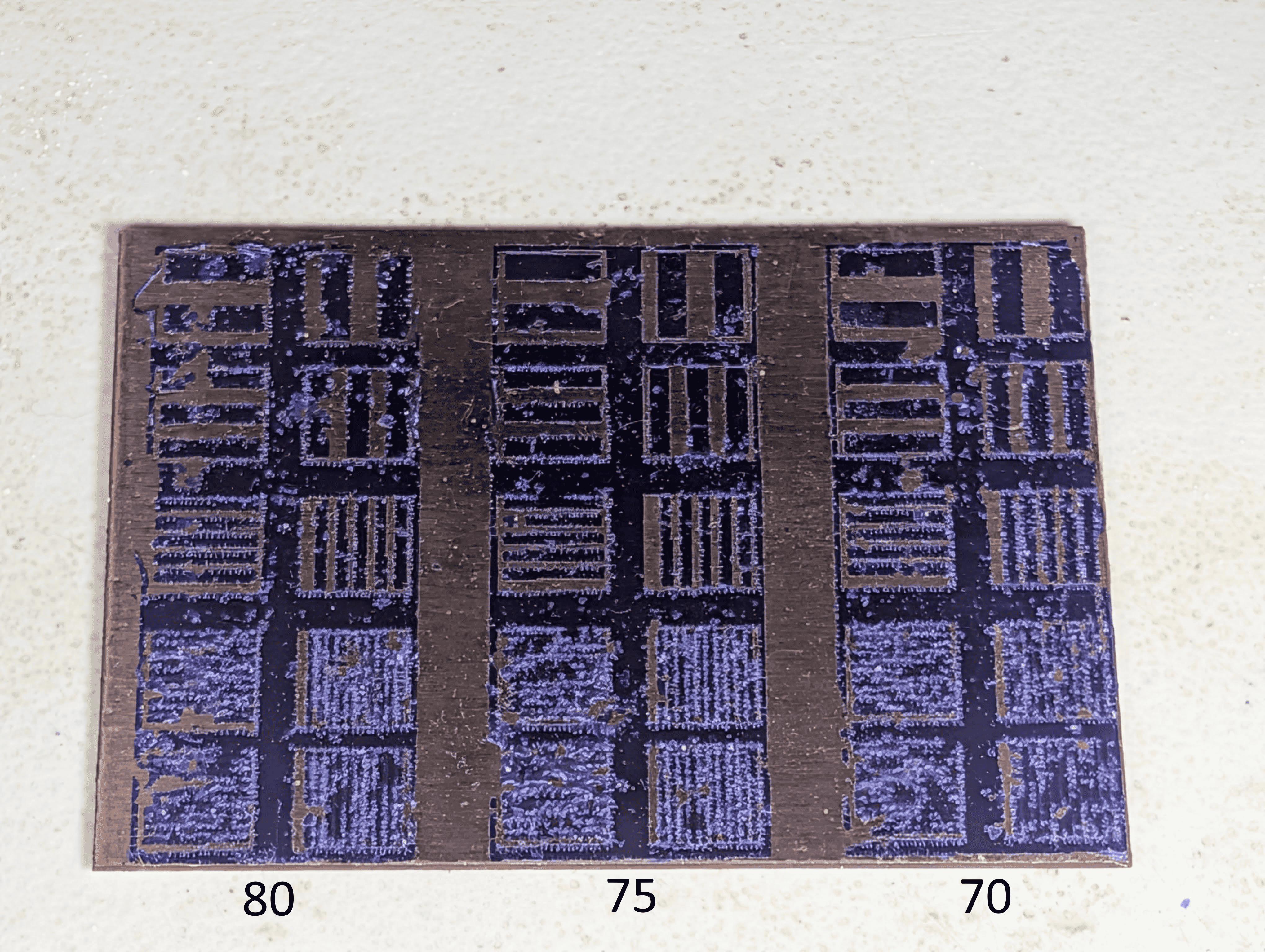
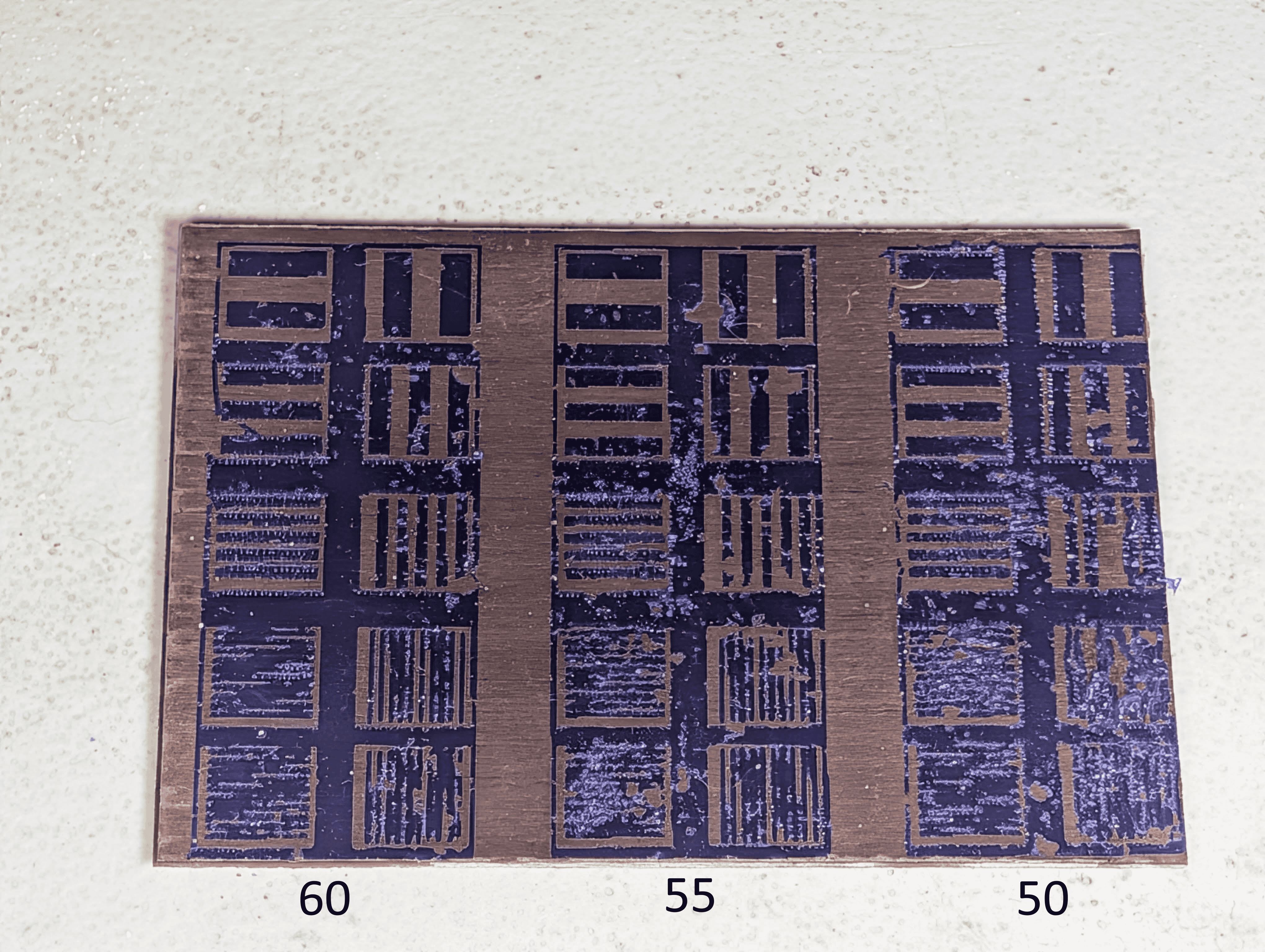
The goal of this series of experiments is to determine a reusable exposure and development time. The test pattern is a series of vertical and horizontal lines, decreasing in thickness as it goes as it travels down the frame, the line thicknesses are: 3mm, 2mm, 1mm, 0.5mm (0.5mm is repeated twice).
The procedure for each sample was to:
- Mix new developer solution, 4 cups of water + 75g of sodium carbonate
- Add to heating bath
- Wait for main bath to reach a minimum of 75f
- Introduce sample to developer
- Wait one minute
- Lightly scrub
- Wait one minute
- Lightly scrub
- Wait one minute
- Lightly scrub
- Remove sample rinse with water
Results:
The procedure described above is partially effective, but is limited in resolution achievable. As is it is not capable of reaching design objectives.
Every trials has apparently random tear out where the photo resist is missing. As the exposure time increases finer details are not being developed. Due to the random tear out it is not possible to tell if exposed mask is being developed, indicating under exposure.
There is an issue of the mask being teared up, I believe this is caused by bubbles in the lamination process that is then made worse by the scrubbing. The cause of the bubbles is unknown, it is believed to be either oil on the substrate, or an error in the process of applying pressure.
There was also a mistake in the generation of the exposure times resulting in inconsistent intervals.
Recommendations:
- Research and implement more consistent lamination techniques.
- Test a spray based development machine, possible using a hand held bottle for the first trials.
- Use a exposure time of 30-45 seconds.
- Improve array generation tool to handle multiple array jobs allowing for wider search areas.
Samples Photos:
These photos where taken after being patted dry with a paper towel. There was still some moisture left.